Getting Better at Getting Better in 2026
Real change compounds when you build systems that make improvement unavoidable.
As we head into 2026, I’m watching a familiar cycle begin: big resolutions, elaborate plans, and promises of transformation that often fade by February.
After years of leading engineering teams and working on my own growth, I’ve learned something simple and inconvenient: the most meaningful change rarely comes from dramatic gestures. It comes from building systems that make improvement unavoidable.
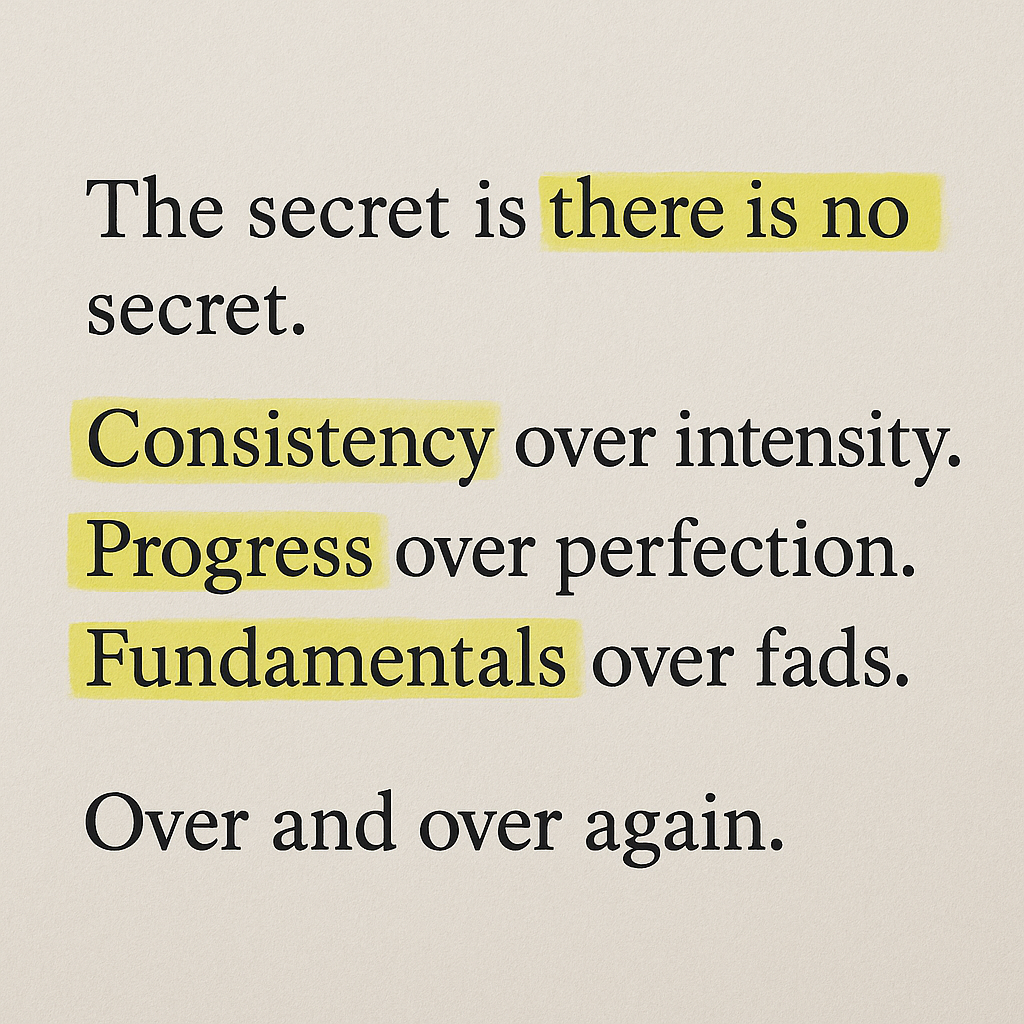 Figure 1: Consistency over intensity - Progress over perfection
Systems beat surges
James Clear talks about this in Atomic Habits: improve just 1% each day and you’re 37× better after a year.
Helpful, but incomplete.
What really compounds is something deeper: getting better at getting better.
It’s the difference between a one-off win and a durable capability.
- The engineer who doesn’t just fix a bug, but improves the test suite.
- The leader who doesn’t just have better 1:1s, but builds a culture where feedback flows without friction.
- The team that doesn’t just solve problems, but sharpens how it solves them.
In engineering terms, outcomes are the feature. Systems are the platform.
Meta-improvement: the compounding advantage
A single improvement is valuable. A system that produces improvements is transformative.
Meta-improvement is the practice of investing in your ability to improve. It means treating learning, feedback, and iteration as part of the operating model, not as a side project.
This can look like:
- Reducing the cost of feedback (faster signals, tighter loops)
- Making the “right thing” the default (guardrails, automation, standards)
- Capturing learnings as reusable assets (runbooks, templates, shared patterns)
- Designing work so improvement happens during delivery (not after)
When you do this consistently, progress stops being dependent on motivation. It becomes a byproduct of how you work.
Kaizen, not as a slogan
This is the heart of kaizen in Toyota’s philosophy: not improvement as an event, but improvement as a discipline woven into daily work.
It’s not always exciting. It’s rarely glamorous. But it is effective.
We’re constantly tempted by the new framework, the trendy methodology, and the latest productivity hack. Those can help. Sometimes they even matter.
But what transforms individuals, teams, and organizations is far less dramatic:
- Consistency over intensity
- Progress over perfection
- Fundamentals over fads
Over and over again.
What I’m focused on in 2026
This year, I’m not just chasing better outcomes. I’m investing in better systems for improvement.
I want improvement to be the default behavior, not something I have to summon through willpower.
A question for you
What’s one small system or habit you’re putting in place to improve how you improve in 2026?
Share this post
Related Posts
Pipeline-First Is Not a DevOps Initiative - It's a Culture Shift.
Everyone sells pipeline-first delivery as a best practice. Remove access. Route through automation. Enforce consistency. What the slide deck leaves out is the part that actually determines whether this works.
Strip the Assumptions: What Enterprise AI Adoption Actually Is
Most enterprise conversations about GenAI are arguments about assumptions nobody has questioned. Here is what stays when you strip everything else away.
Dark Fiber, Bright Future: Why the AI Infrastructure Boom May Need Its Bust
The companies that built the modern internet went bankrupt doing it. The companies building AI infrastructure may follow the same path. That is not a warning. It is how transformative technology actually works.